Finally, I have achieved this stage – the last assessment in my master degree. I will analyse and give the details of production of Cubibibism (Video Link:https://youtu.be/5Cg1mSnbydI?si=Y1l9WdgtZGIdVR7X).
Foreword: This graduation project is a fan-made work based on the game Needy Girl Overdose. None of the characters are original creations. The song used is Cubibibism. I originally planned to create a 1 minute 50 second video, but due to various reasons, such as autumn recruitment and testing in China, and career planning, time was limited. I ultimately only completed 23 seconds. In terms of workload, it’s only about 25%-30% of the original plan. Even though I didn’t finish it, and the deadline didn’t allow it, I still wanted to complete this video sometime after graduation.
P.S. The character models used are the MikuMikuDance models (.pmx). I am not the owner of the copyrights for these resources.
Part 1
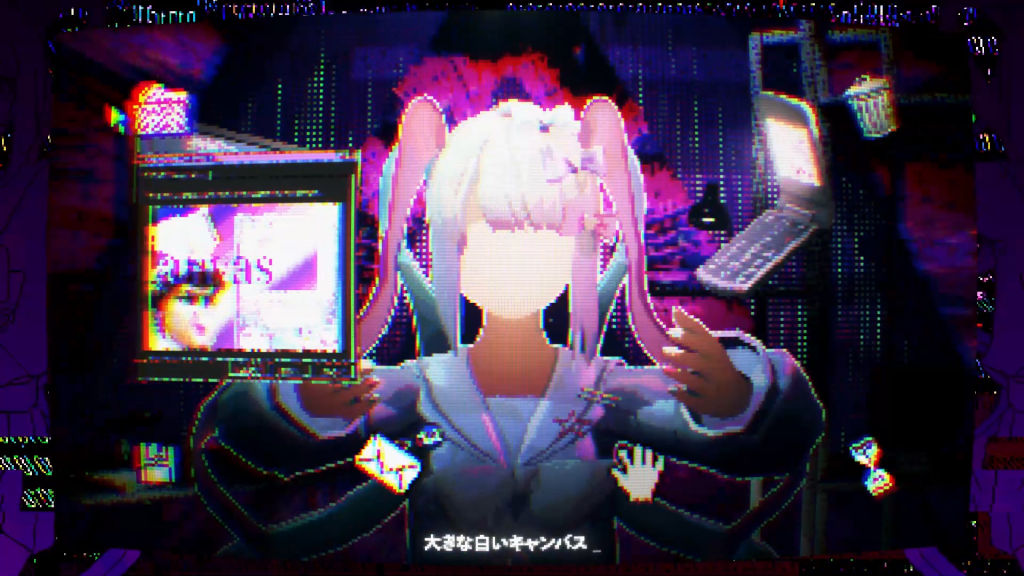
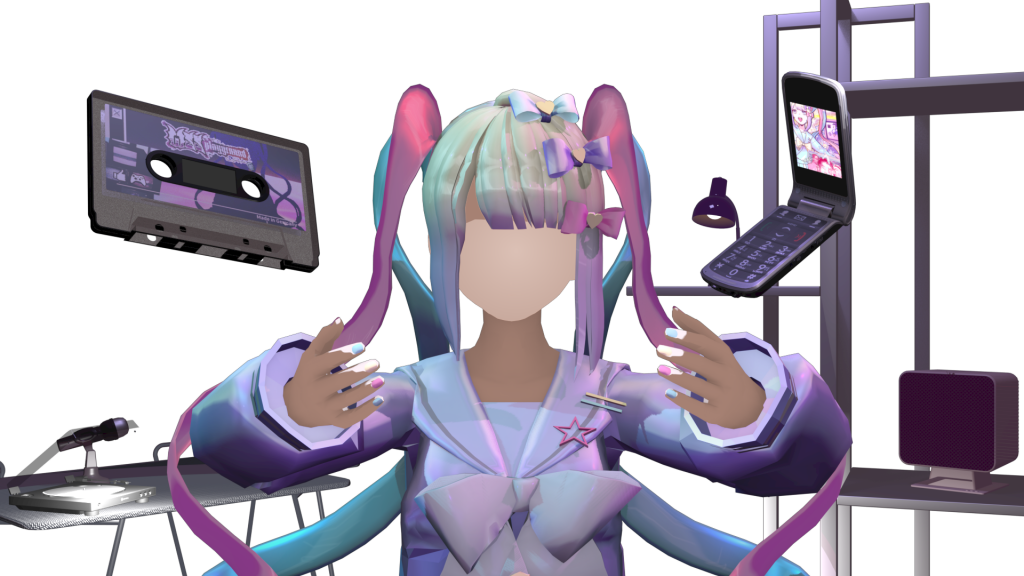
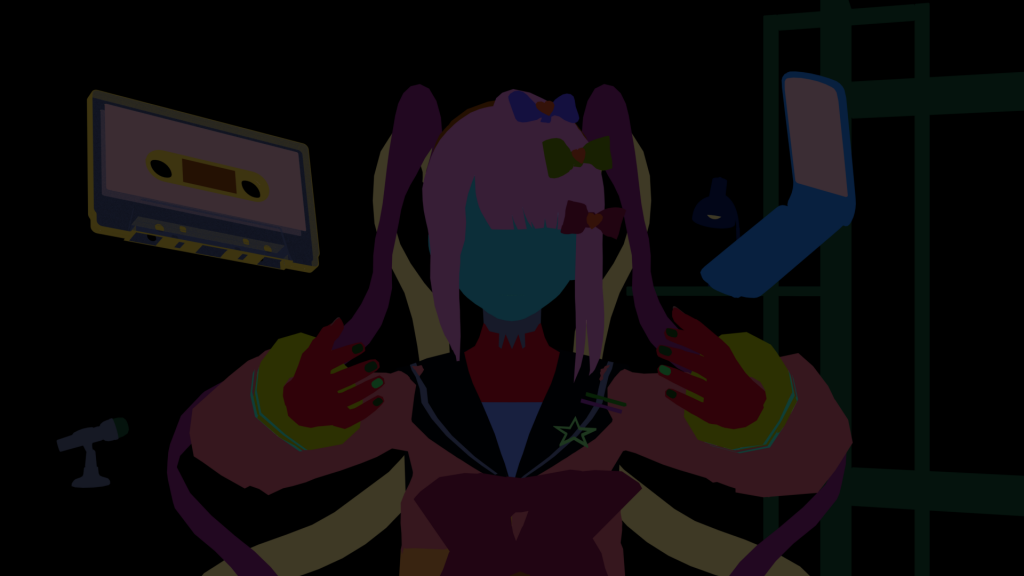
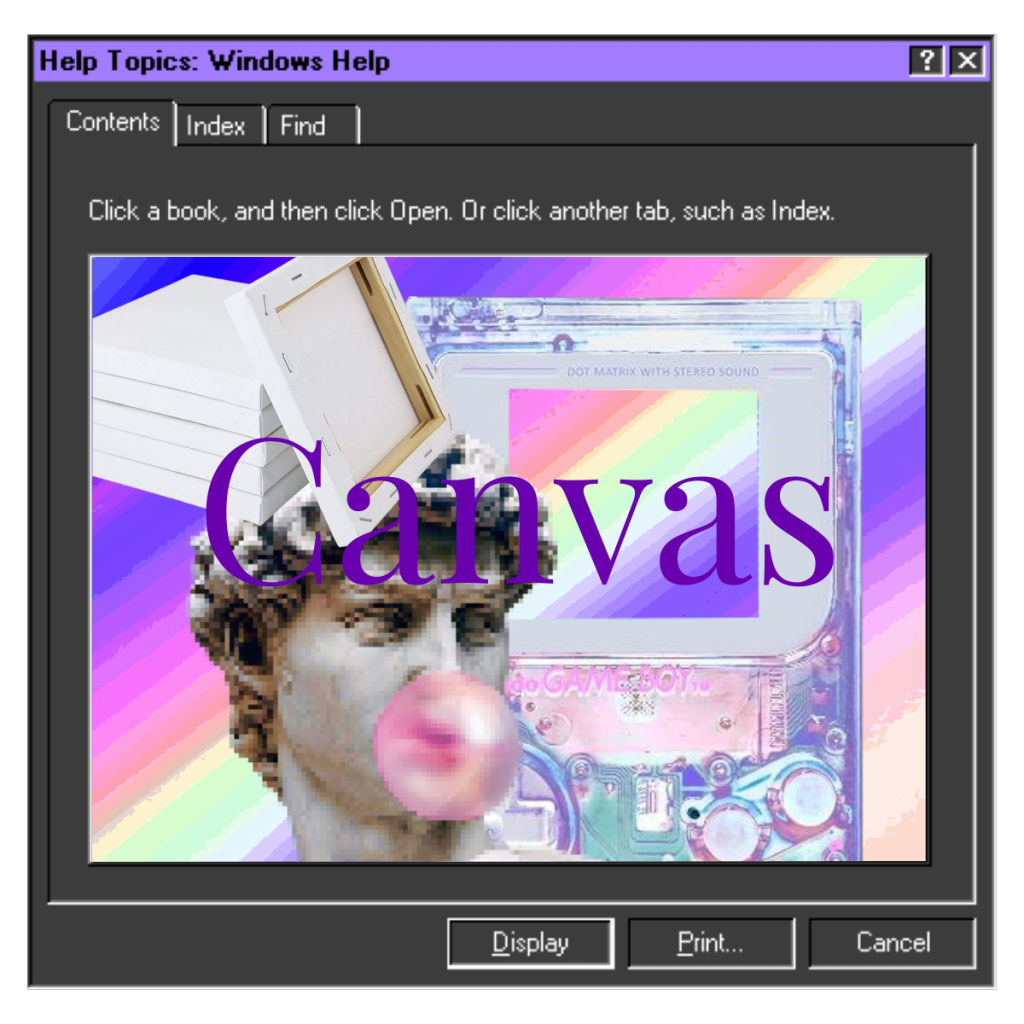
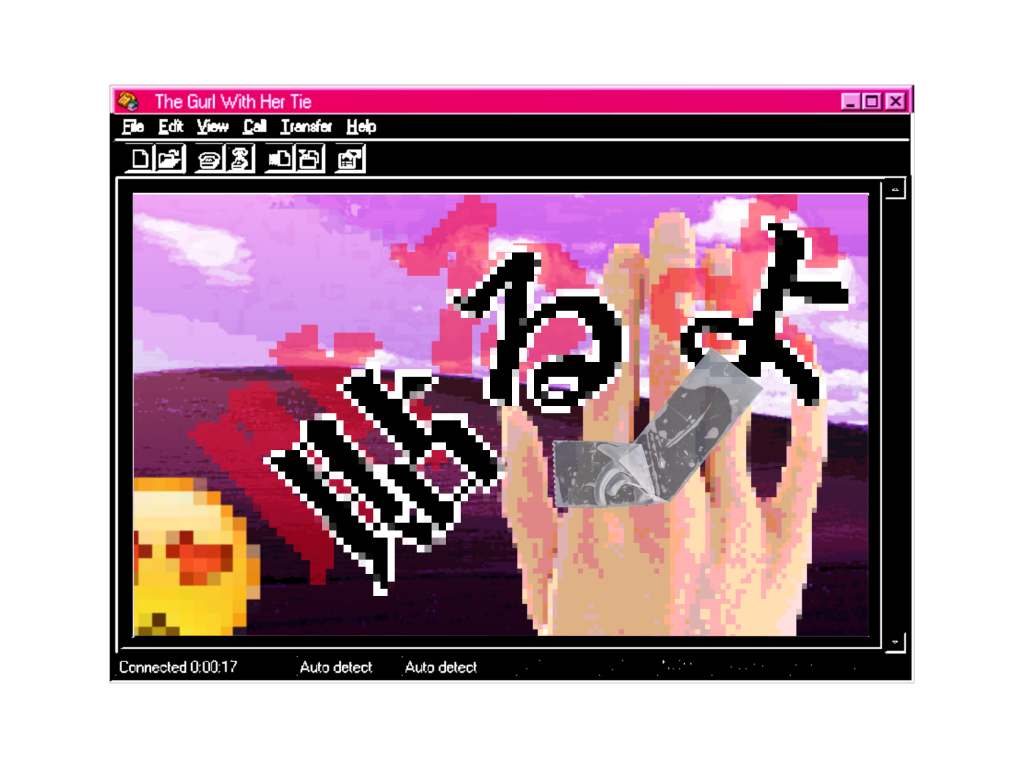
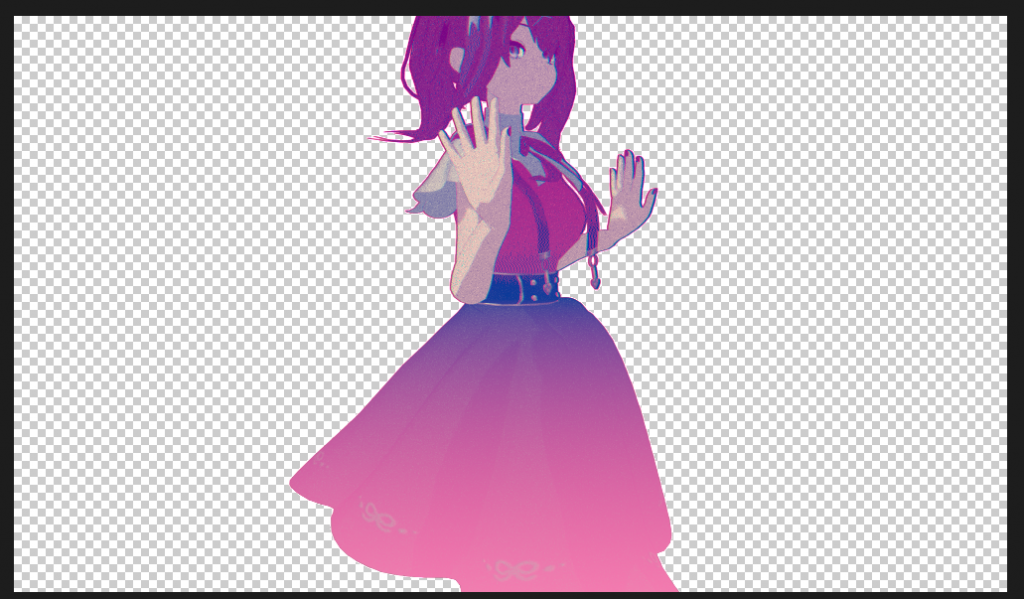
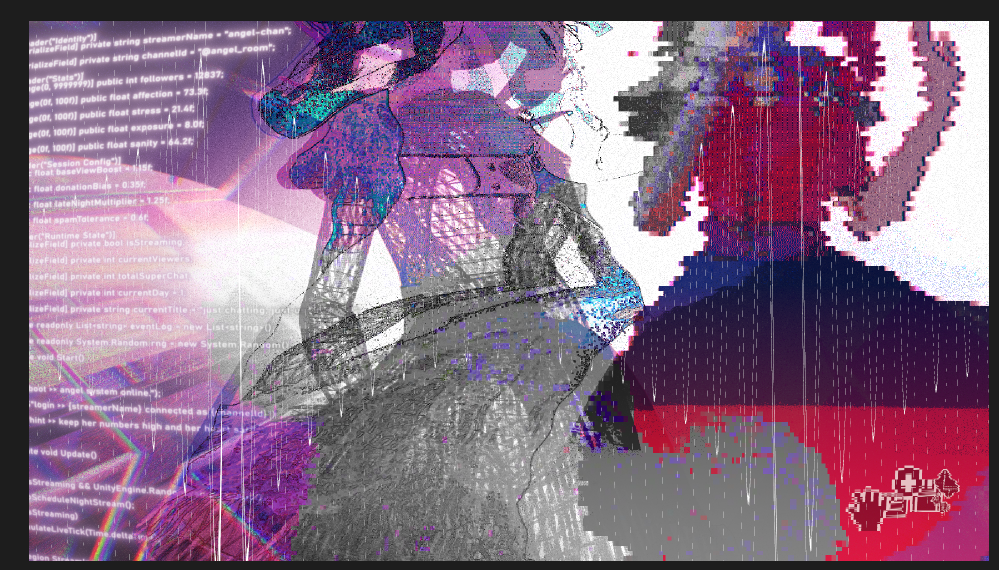
These are the screenshots and elements from the initial production stage. At first, I wasn’t entirely clear on what kind of visuals I wanted. My initial idea was to first show that the protagonist has different personalities and also to briefly define the visual style. My local style keywords can be summarised as ‘Y2K aesthetics’, ‘glitch art’, and ‘vaporwave/citypop art’, for the simple reason that this is the visual style of the original game. This represents the protagonist’s mental world, illustrating how she is influenced by her other personality.
This storyboard primarily depicts her feeling of being controlled by another personality within herself. It was specifically designed to be faceless. Most of the material was created by me.
Part 2
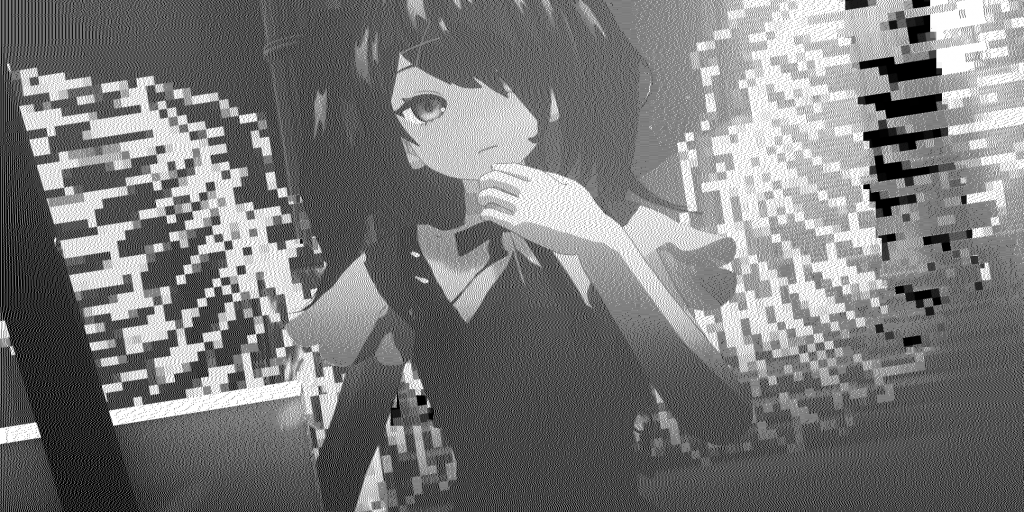
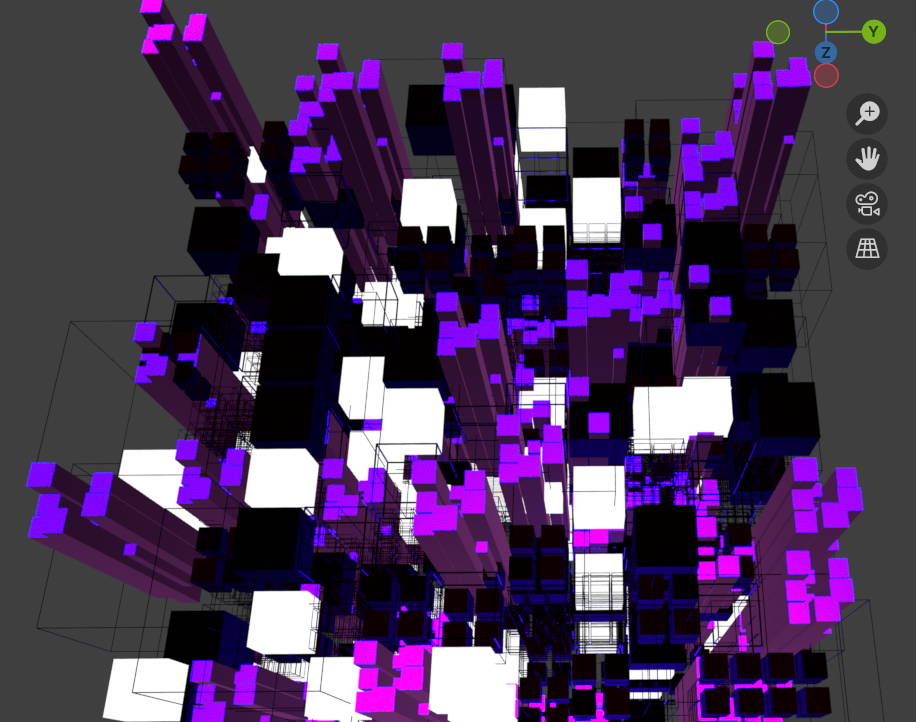
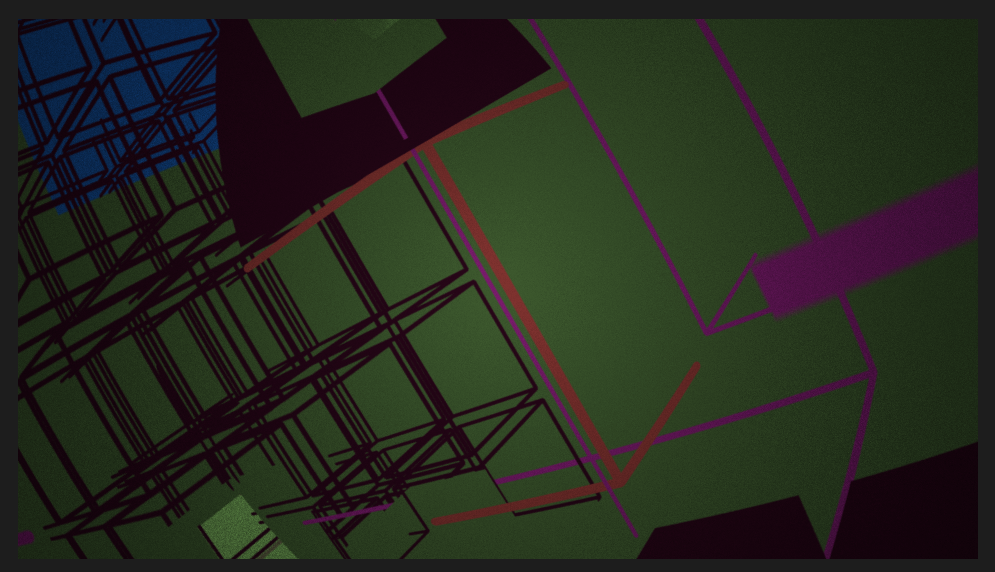
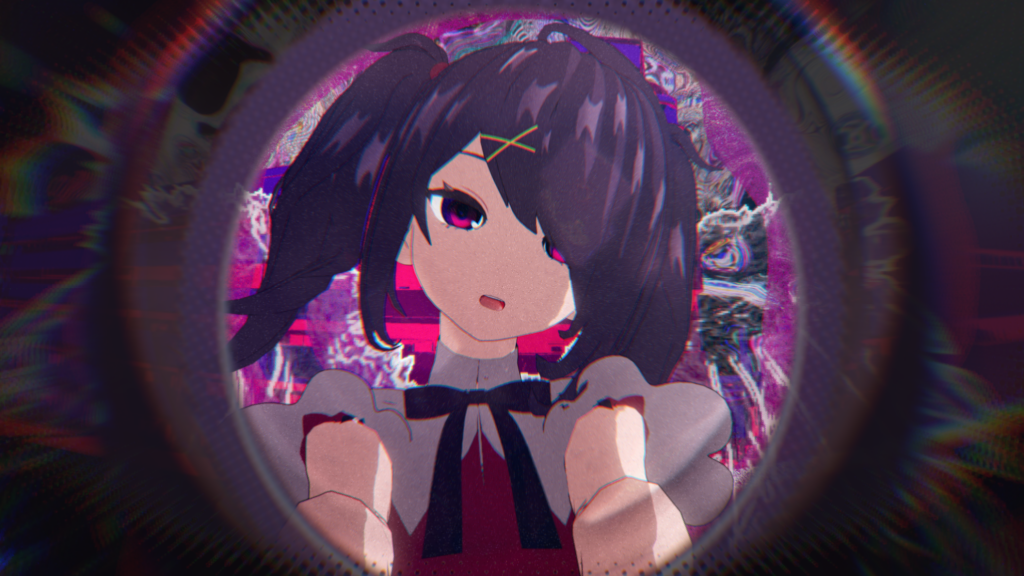
The church is also a fictional place, reflecting the theme of “Internet Angels”. She is tracked in this stationary scene, while speculating the surrounding environment.I completed all the 3D work in Blender and exported the Cryptomatte file for further stylized compositing in After Effects.
Part 3
3a.
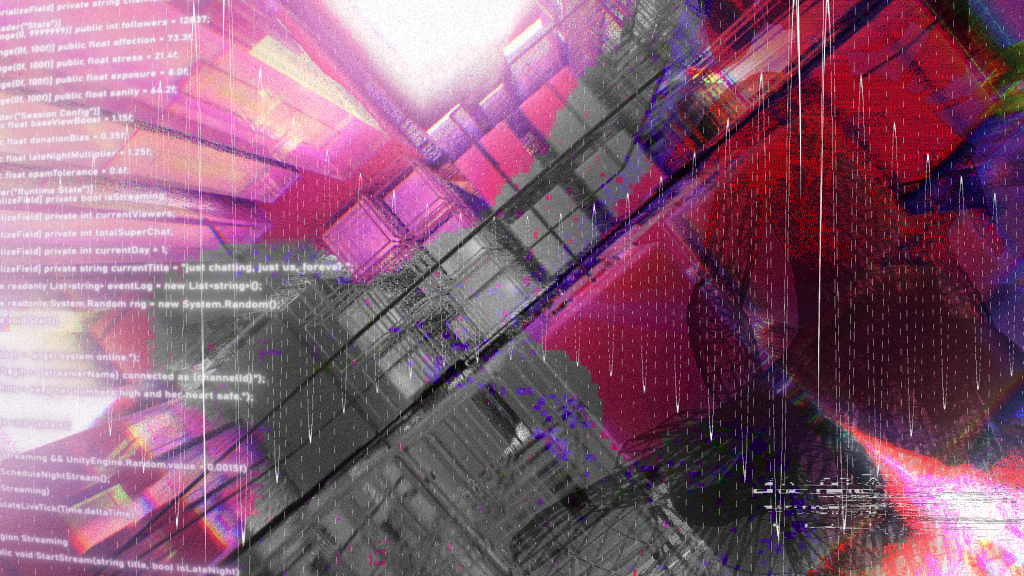
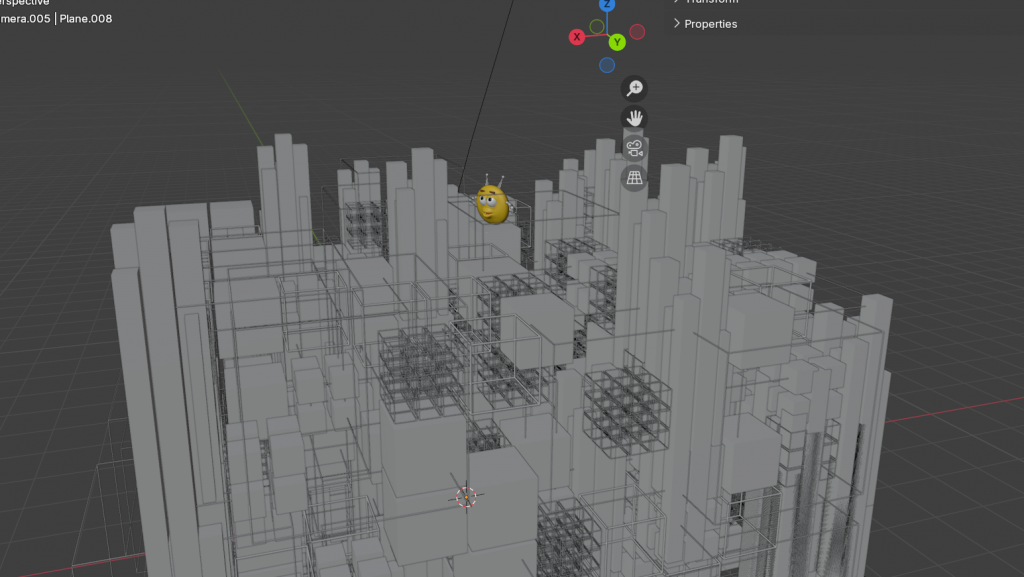
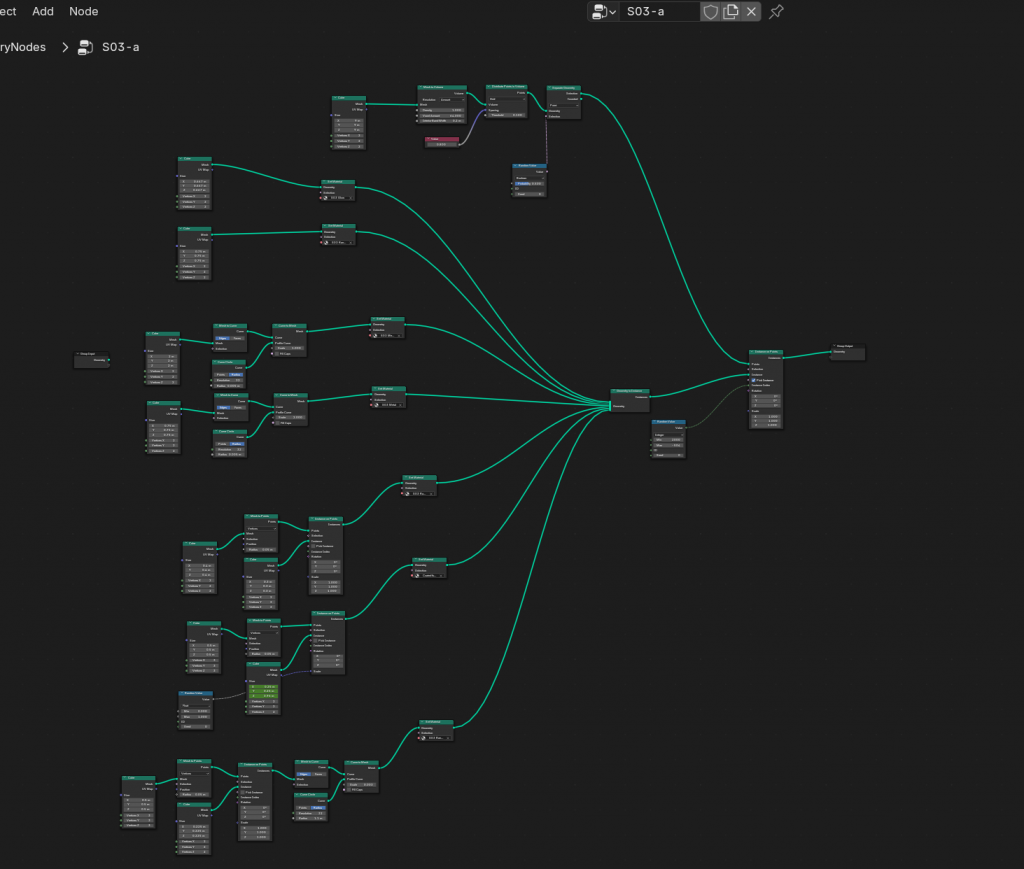
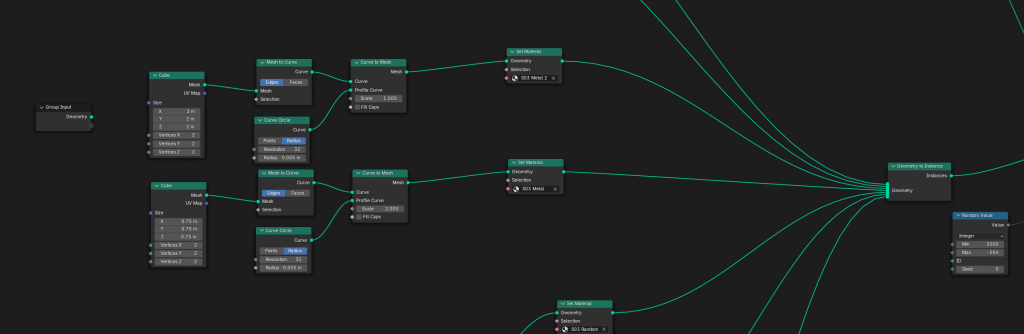
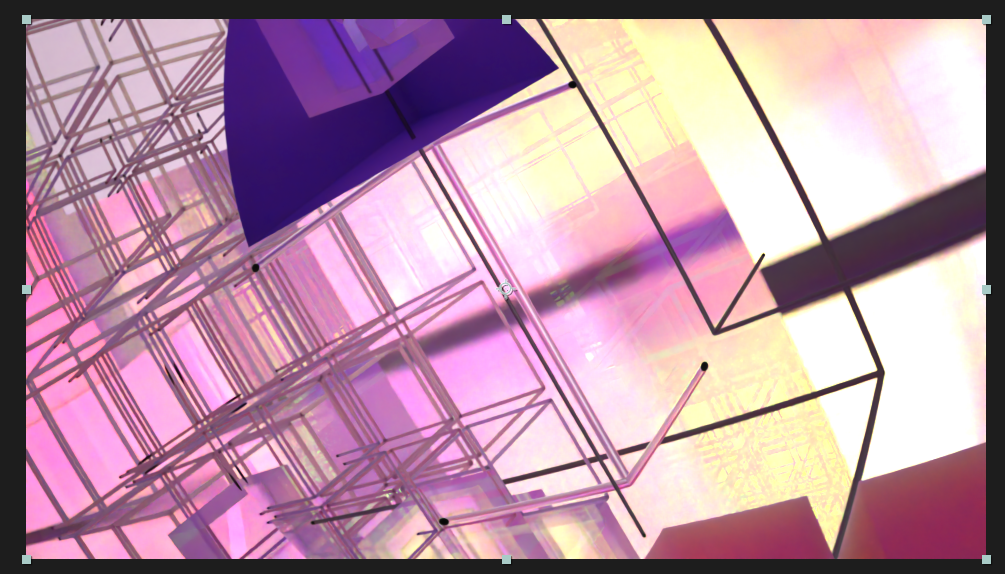
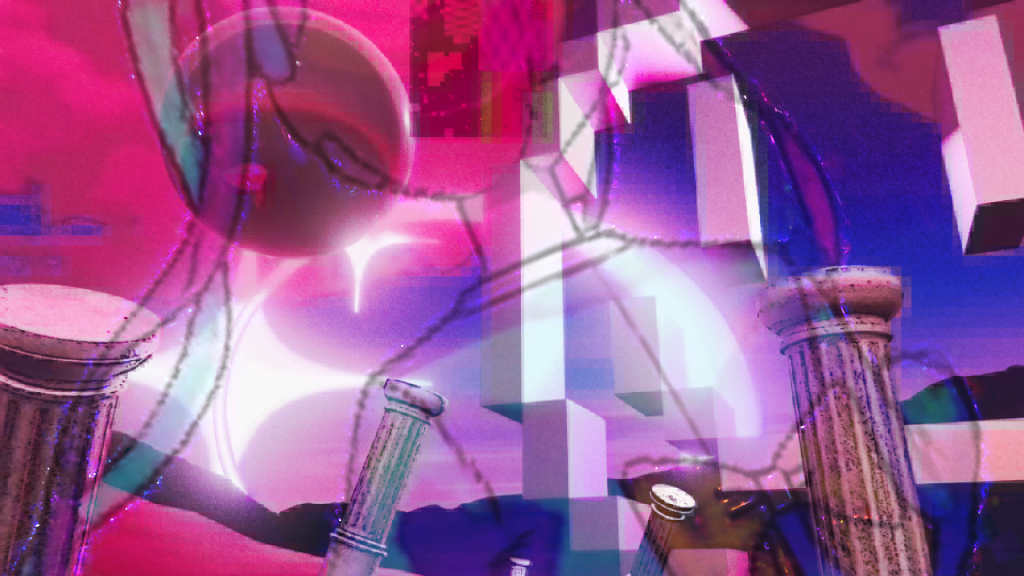
By using the geometry nodes function in Blender, a “cubic” structure is organized. This design adapts with the name of the BGM, and I think it is efficient to accomplish the effect, as it is procedural and the texture is simple.
Production in Blender
Composition in After Effects
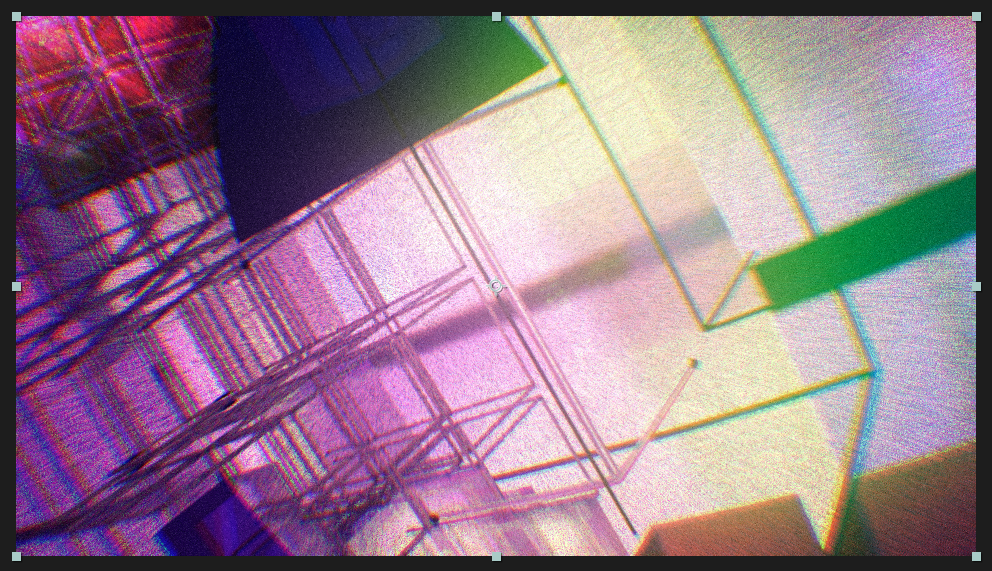
Before & After: By using the cryptomatte channel, the quality of the scene is greatly improved.
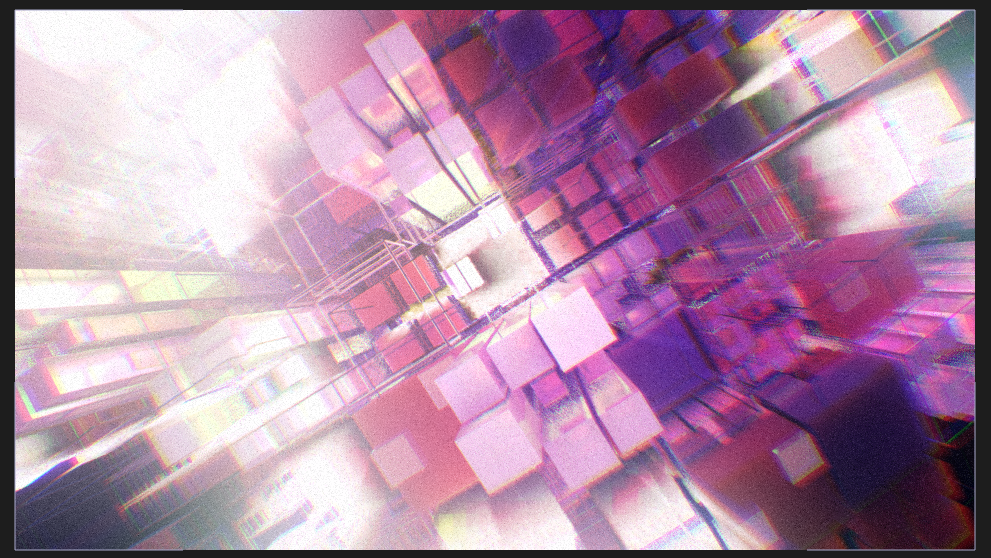
Stylised character animation, and more composition
Part 4
Part 5
Reflection
This graduation project has taught me several valuable lessons—perhaps more than I initially expected.
One of the most important realities I had to confront was the conflict between creative ambition and real-world pressure. Due to my job search and career preparation, I simply could not dedicate as much time and energy to this project as I originally planned. To be honest, for a master’s graduation project, what I ultimately submitted was far from ideal. My initial plan was to produce a piece lasting around 1 minute and 50 seconds, but by the final submission, the work had been reduced to just a little over 20 seconds.
Although I genuinely believe that I put a great deal of care and technical effort into every single shot and composite, the overall length inevitably limits how complete or satisfying the final work can feel. No matter how polished each moment is, such a short duration struggles to fully communicate the depth, structure, and ambition that a graduation project is expected to demonstrate.
Another major realization was my over-reliance on After Effects. While After Effects remains an incredibly powerful and flexible tool, this project made its limitations very clear—especially when dealing with EXR workflows. EXR files, with their multi-pass and high-dynamic-range data, do not integrate as smoothly into After Effects as they do in node-based compositing software. This led to inefficiencies in my workflow and restricted how much control I could realistically maintain during compositing.
In hindsight, this project highlighted the importance of choosing tools not only based on familiarity, but also based on the specific technical demands of the work. Relying too heavily on a single piece of software can become a bottleneck, even if that software is industry-standard or personally comfortable.
Ultimately, while the final outcome did not fully match my original vision, the process itself was highly instructive. It forced me to reflect on time management, pipeline design, and the balance between career pressure and creative integrity. These lessons will undoubtedly influence how I approach future projects—both in terms of planning scope realistically and building a more flexible, production-ready workflow.
In that sense, even with its shortcomings, this graduation project still served its purpose: not just as a final piece of work, but as a meaningful step forward in my development as a creator.
Leave a Reply